Can One Airless Sprayer Run Two Spray Guns at Once? A Contractor's Guide
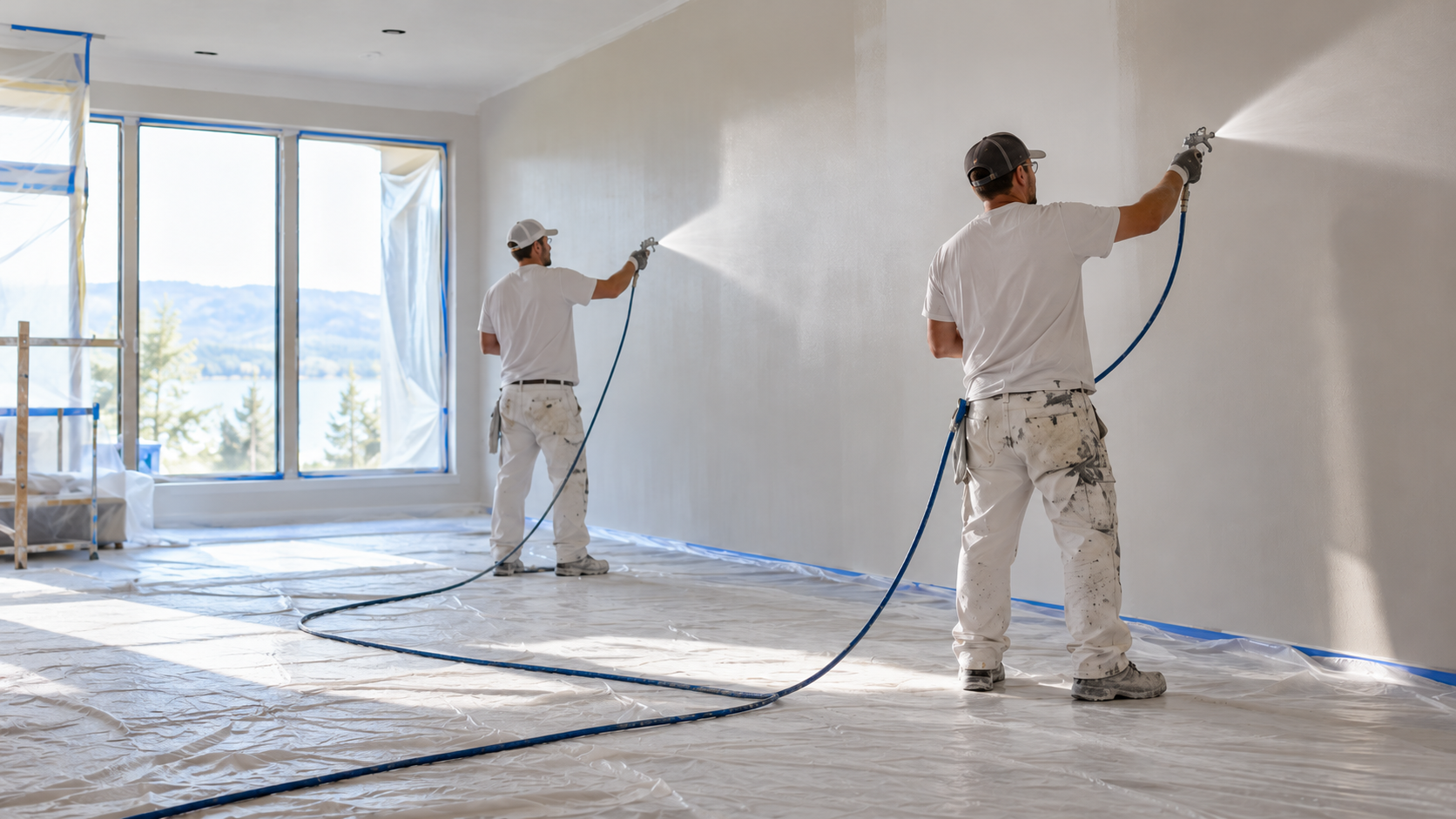
On big interior jobs — new-build apartments, commercial shells, warehouse walls — the question comes up fast: can we put two painters on one machine? Running two guns from a single airless sprayer is possible, and on the right jobs it is a real productivity win. But it is not a free upgrade. Whether it works depends far more on how much paint your pump can move than on the pressure number on the box. This guide explains how dual-gun setups actually work, how to check whether your machine can do it, and when two separate sprayers are the smarter choice.
What determines whether one sprayer can run two guns
An airless pump pushes paint out of one fluid outlet. To feed two guns you split that single output — usually with a manifold or a second hose outlet — into two high-pressure hoses, each ending in its own gun. Some machines ship with a second outlet already fitted; others need an aftermarket twin-outlet manifold. The critical point is that the two guns share one pump. They do not each get the pump's full output — they divide it, and everything downstream has to work within that shared budget.
Pump flow rate and pressure
Pressure in bar or psi is what atomises the paint — it breaks the fluid into a fan at the tip. Flow, in litres per minute, is how much paint the pump can actually deliver per minute. When you open a second gun you are asking the pump for more flow at the same pressure. A sprayer can hold its rated pressure with one gun and then sag the moment a second trigger opens, because it has run out of flow, not pressure. So the number that decides a two-gun setup is the delivery or flow rate, not the headline pressure. A useful habit, confirmed against your own pump: add the flow each tip will draw at your working pressure, then add roughly 20% headroom for pressure stability. The total must sit inside the pump's rated flow at that pressure with those tips — not its free-flow figure, which overstates real output.
Hose length, pressure loss and tip size
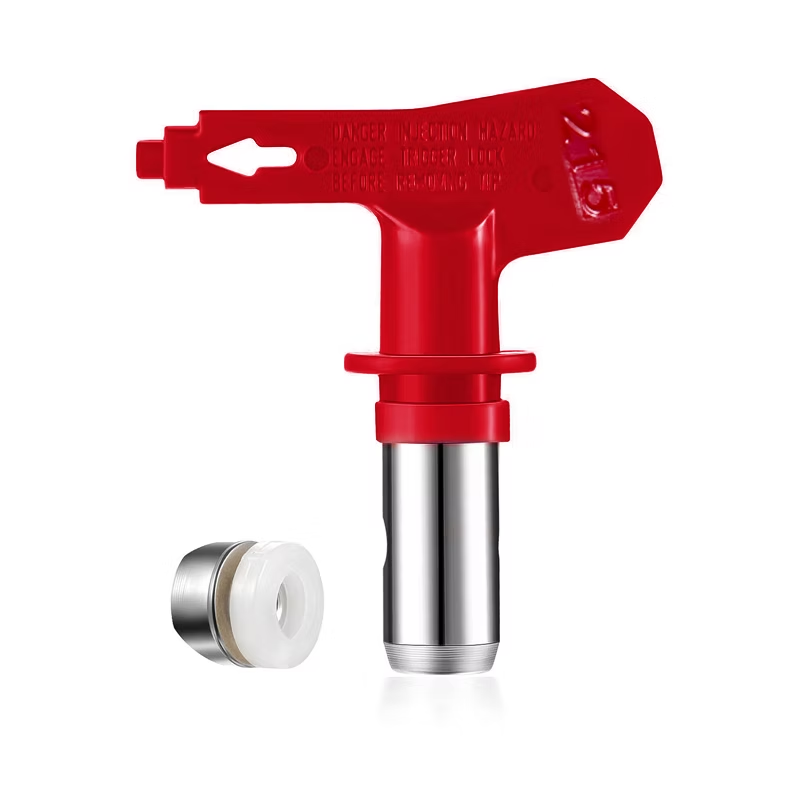
Tip orifice controls how much paint a gun consumes. Two guns means the pump's flow is split, so each gun generally has to run a smaller tip than a single gun would on the same machine. This is exactly what manufacturers do: a sprayer rated for a given maximum tip on one gun will list a smaller maximum when two guns are used, because the flow now feeds two tips at once. Hose matters too — each gun needs its own correctly-sized high-pressure hose, and long or undersized hoses cause pressure loss that, doubled across two lines, quickly starves the guns. A short whip hose at each gun improves handling without adding much loss.
Reading a machine range by flow makes the limits concrete:
| Flow (L/min) | Realistic for two guns? |
|---|---|
| About 2 (compact finishing units) | No — small-tip finishing only |
| About 3 | Marginal; two very small tips, light coatings |
| About 8 | Yes — two mid-size tips |
| About 9–10 | Yes — comfortable twin-gun headroom, heavier coatings |
Thin, free-flowing material (primers, wall emulsion) is far more realistic with two guns than heavy build coatings (fillers, high-build masonry), which need more pressure and flow per gun and are harder on the pump. If you spray heavy fillers, plan around one gun per machine unless the sprayer is specifically rated for twin heavy-build output.
When a two-gun setup is practical
A dual-gun setup earns its keep on large, open, repetitive surfaces — walls, ceilings, shells — where two painters can work without crossing streams, with thin-to-medium materials on a high-flow machine that has headroom to spare, and on jobs where setting up and cleaning a second machine would cost more time than it saves. Match each gun to its tip, pick tips from the smaller end of the pump's range, and keep the gun filters and the manifold or pump filter clean, since a blocked screen on a shared pump hurts both operators.
Common problems
- Shared supply means shared compromise: if one operator sprays heavy and one sprays light, the heavy gun can rob the light one.
- Pressure dips when both triggers open together, so operators learn to stagger.
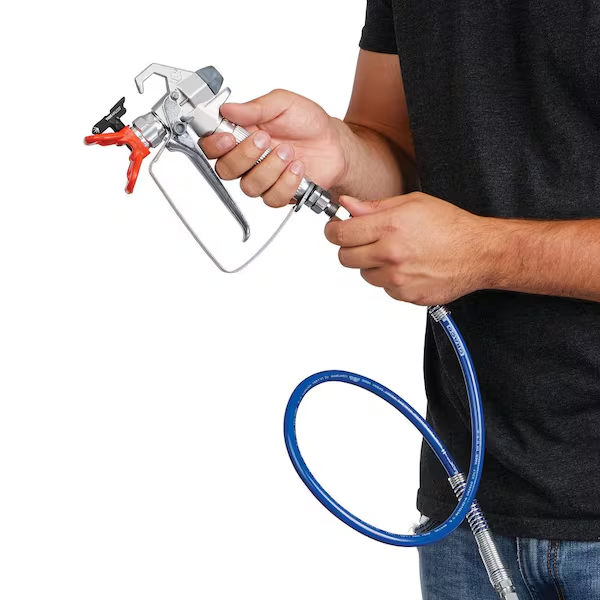
- Airless fluid can inject through skin — every gun needs a working trigger lock and tip guard, and pressure must be relieved before servicing a manifold or changing a tip.
- Two guns ask more from the drive; on electric machines watch for voltage sag on site power.
- Sizing by the headline pressure, using free-flow ratings, or running single-gun tip sizes on two guns all lead to starved guns.
Is it worth it for small crews?
For a small crew, one high-flow machine plus a manifold and a second hose and gun can be cheaper than buying a second sprayer — but only if the pump genuinely has the flow, with the roughly 20% headroom above. Two separate machines usually win for heavy fillers, for operators working in different rooms or at different pressures, and for redundancy, since two machines mean one breakdown does not stop the whole crew. Decide it on flow, not pressure: add both tips' consumption, add headroom, and check it against your pump's rated flow at working pressure. If you are choosing a sprayer with twin-gun capacity in mind, look at the higher-flow models and size your tips from the smaller end of their range.