
Airless Spray Tip & Filter Guide: Match the Tip, Filter and Material
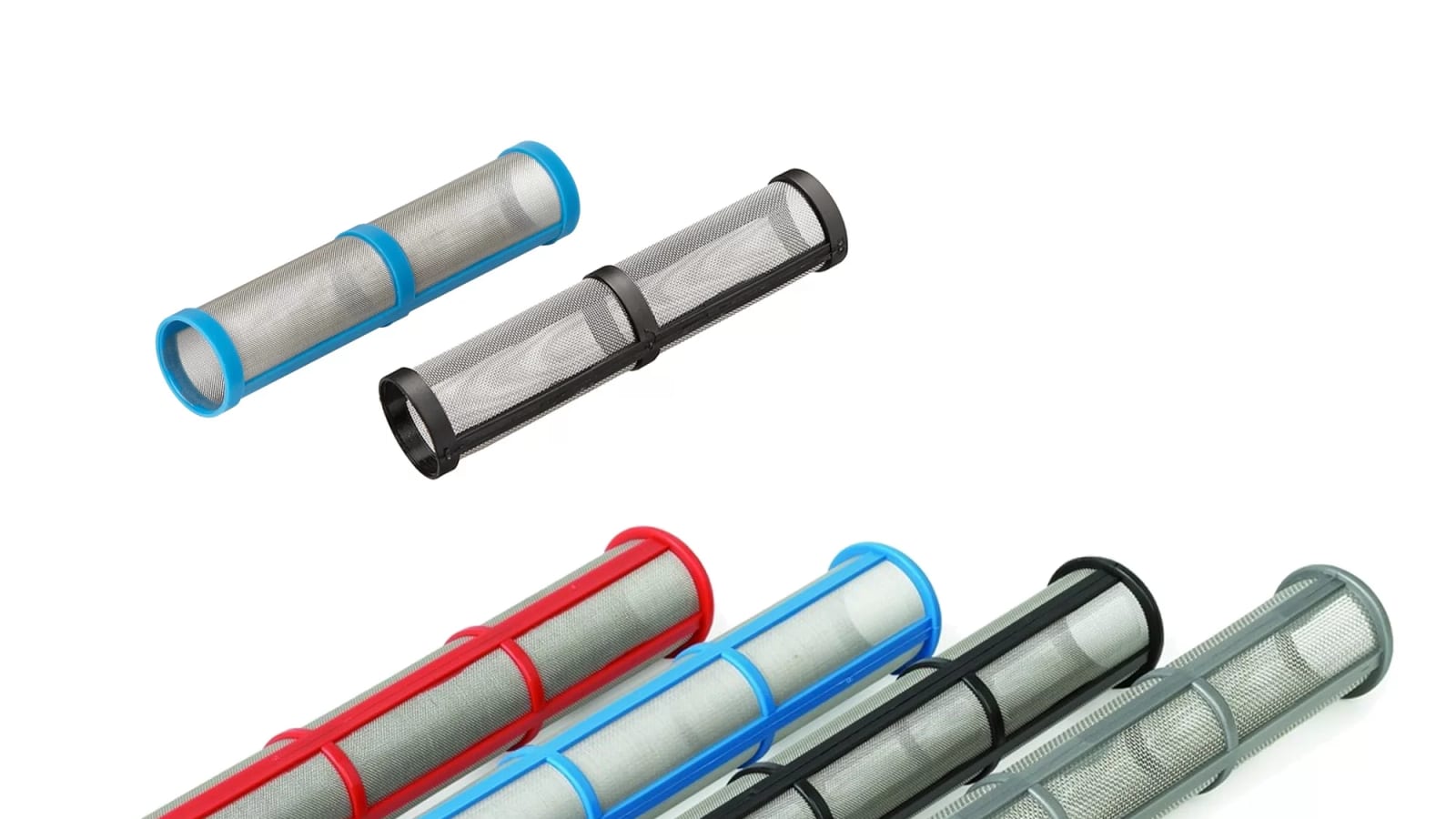
On an airless sprayer the tip and the filters are a single system. The tip sets the fan width and how much material leaves the gun; the filters decide what is allowed to reach that tip in the first place. Get the pairing right and you spray clean fans all day with fewer stops. Get it wrong and you fight tails, spitting and blocked tips no matter how you adjust the pressure. This guide explains what each filter does, how mesh relates to orifice size, and how to match both to the material you are spraying.
Why filtration matters on an airless system
Airless works by forcing coating through a small carbide orifice at high pressure so it atomises without air. That orifice is unforgiving: a single flake of dried paint, a lump of pigment or a piece of tin foil from a fresh bucket is enough to partly block it. A partial block distorts the fan (you see a heavy edge or a tail), and a full block stops the gun. Filtration removes those particles before they reach the tip, which protects the fan pattern, reduces tip wear and keeps you working instead of clearing blockages.
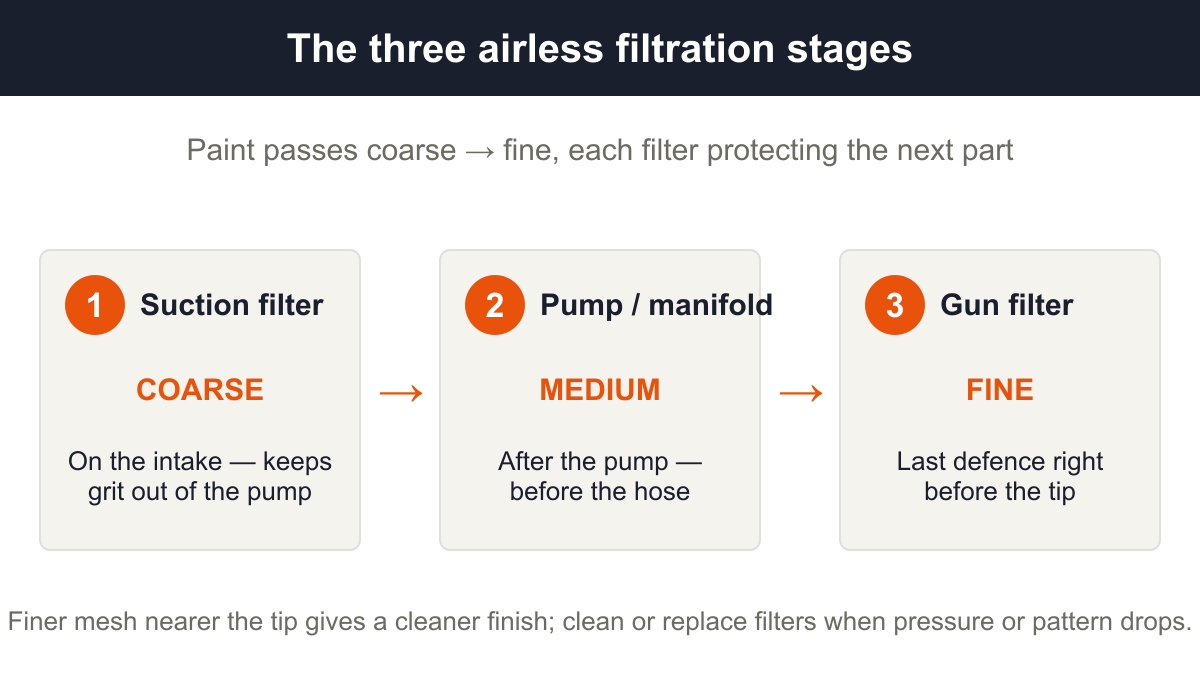
Filtration is layered on purpose. Each stage catches progressively finer particles, so no single filter has to do everything. Think of it as coarse-to-fine, from the bucket to the tip.
The filtration stages, from bucket to tip
Suction / inlet strainer
The first line of defence sits at the pump inlet or on the suction tube in the bucket. This is a coarse strainer that keeps skins, dried lumps and site debris out of the pump. It protects the most expensive part of the machine, so it should always be in place. If it is missing or torn, large particles reach the pump and downstream filters clog far faster.
Manifold / pump filter
The manifold (pump) filter is the main in-line filter on the machine, usually a cylindrical mesh element in the pressure block. It does the bulk of the work, catching medium particles before the material travels down the hose. A blocked manifold filter shows up as low output and a machine that struggles to build or hold pressure. It is a routine service item and should be cleaned whenever you flush the machine.
Gun filter
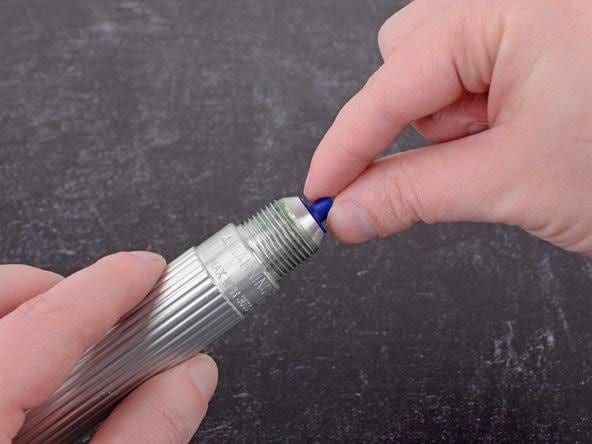
The gun filter is the last, finest stage, sitting in the handle just before the tip. It is your final guard against the particle that would otherwise block the orifice. Because it is the finest filter in the chain, it is also the one that clogs most visibly: if the gun starts to spit or the fan collapses mid-wall, the gun filter is the first thing to check. Many professionals keep a spare gun filter in a pocket for exactly this reason.
Understanding filter mesh
Filters are graded by mesh, and mesh is simply the number of openings per inch of screen. A higher mesh number means more, smaller openings and therefore finer filtration; a lower number means fewer, larger openings and coarser filtration. Manufacturers often colour-code gun filters by mesh so you can tell them apart at a glance, but the colours are not standard between brands, so read the mesh value rather than trusting the colour.
The important idea is that finer is not automatically better. A very fine filter gives excellent finish on thin material, but it will choke and clog on heavy material that cannot pass through it. A coarse filter passes heavy material happily, but on thin material it lets through particles that spoil a fine finish. The mesh has to suit the coating.
How the tip orifice and filter mesh work together
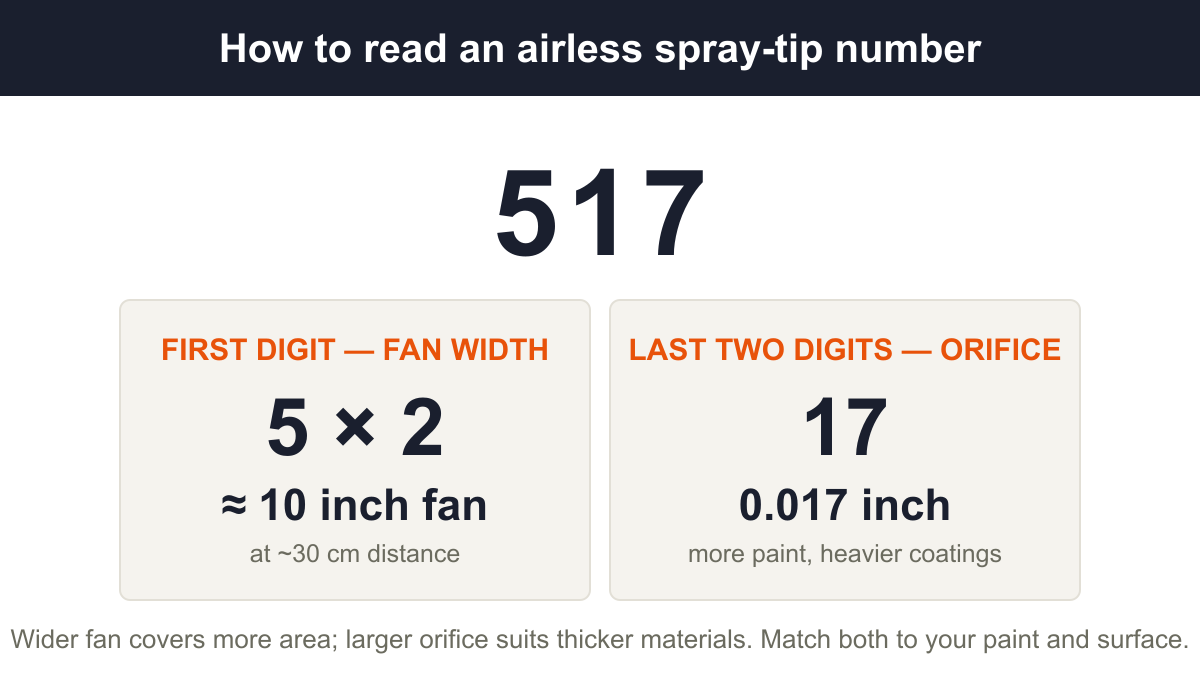
The tip is described by a three-digit number. The first digit, doubled, is the fan width in inches at roughly 30 cm from the surface; the last two digits are the orifice size in thousandths of an inch. A 517 tip, for example, sprays about a 10-inch fan through a 0.017-inch orifice. Bigger orifices pass more material and suit heavier coatings; smaller orifices give finer atomisation for thin materials.
The rule that ties the two together: the filter must be fine enough to protect the orifice, but coarse enough to pass the material. As a broad industry convention, smaller tips are paired with finer filters and larger tips with coarser filters, so the filter never becomes the bottleneck for a tip that is meant to move a lot of material. If you fit a fine gun filter behind a large tip on heavy paint, the filter clogs long before the tip does; if you fit a coarse filter behind a small tip on lacquer, debris reaches the orifice and ruins the finish.
Match tip and filter to the material
Viscosity is the deciding factor. Thin materials need fine filtration and small orifices; heavy materials need coarse filtration and large orifices. The table below is a practical starting point that connects common material families to a tip-orifice range and a filtration approach. Treat the tip sizes as typical ranges, not fixed values — always follow the coating manufacturer's recommended tip range and your sprayer's rated maximum tip size.
| Material | Typical tip/orifice | Filtration approach | Notes |
|---|---|---|---|
| Stains, sealers, very thin coatings | Small (approx. 0.009–0.013 in) | Fine (fine gun filter + manifold filter) | Fine filtration protects the small orifice and keeps the light finish clean. |
| Lacquers, clear finishes | Small (approx. 0.011–0.015 in) | Fine | Finish-critical; a single particle shows, so keep filters clean and fresh. |
| Enamels, trim and metal paints | Small–medium (approx. 0.013–0.017 in) | Fine to medium | Balance atomisation quality against flow; step up filter mesh if you see tails. |
| Interior wall paint, primer | Medium (approx. 0.015–0.019 in) | Medium | The everyday combination for walls and ceilings; medium mesh passes the paint without spoiling finish. |
| Latex / emulsion (heavier batches) | Medium–large (approx. 0.017–0.021 in) | Medium to coarse | Heavier emulsions clog fine filters; open up the mesh before you open up the tip. |
| Facade and masonry coatings | Large (approx. 0.019–0.025 in) | Coarse (or run without a gun filter per the tip maker's guidance) | High solids and grain need free flow; coarse or no gun filter, with the inlet and manifold filters still in place. |
| Fillers, block fillers, heavy putty | Very large / dedicated tip | Coarse or none at the gun, per manufacturer | Very heavy material can require removing the gun filter entirely; check both the coating and machine documentation first. |
Two principles run through the whole table. First, when a heavy material will not pass, open the filtration before you open the tip — a coarser filter often solves the problem while keeping a finish tip. Second, running with no gun filter is a legitimate choice for the heaviest coatings, but only when the tip maker allows it and the upstream strainer and manifold filters are still doing their job.
Reading the symptoms
The spray pattern is a diagnostic tool. A fan that is heavy on one edge or shows tails at low pressure usually means the material is under-atomised, the tip is worn, or a partial blockage is forming — check the tip and gun filter before you simply raise the pressure. Sudden spitting or a fan that collapses mid-stroke points to a clogging gun filter or a tip starting to plug. A machine that will not hold pressure and delivers weak output, with clean fans when it does spray, usually points upstream to a blocked manifold filter or a starved inlet.
For a deeper look at pressure and fan problems, see the guide on airless spray pressure and pattern adjustment. To tell a clog apart from a genuinely worn tip, the article on recognising airless tip wear explains what to look for.
Cleaning, inspection and replacement
Filters are consumables. Clean them every time you flush the machine, and inspect them for damage rather than just rinsing them. A mesh that is torn, crushed or distorted no longer filters correctly and will let particles through to the tip — replace it. Reversible tips can be turned to the cleaning position to flush a blockage back out; fixed tips are cleared by soaking and gentle brushing, never by pushing wire through the carbide, which damages the orifice and ruins the fan.
- Flush the machine with the correct solvent or water for the coating at the end of every job.
- Remove, inspect and clean the manifold and gun filters; replace any that are torn or crushed.
- Soak stubborn tips and filters rather than scraping the mesh or the orifice.
- Keep a spare gun filter and a spare tip on hand so a clog never ends a working day.
- Store the machine with pump preservative or clean water as your maintenance routine requires.
Filter and tip care is part of wider machine maintenance — the airless sprayer maintenance checklist puts it into a daily, weekly and long-term routine, and replacement filters and tips are listed with the other airless accessories.
A practical selection workflow
- Start with the coating: read the manufacturer's data sheet for the recommended tip-orifice range.
- Pick the fan width for the surface — wider fans for large flat areas, narrower fans for trim and detail.
- Choose the smallest orifice in the recommended range that still moves the material without straining.
- Match the filter mesh to the tip: finer filter for smaller tips and thin material, coarser filter for larger tips and heavy material.
- Confirm the tip is within your sprayer's rated maximum tip size before you start.
- Spray a test pattern on cardboard; if you see tails or a heavy edge, adjust in this order — clean the tip and filter, then raise pressure a little, then step up filter mesh, and only then consider a different tip.
- Keep filters clean throughout the job; a clean filter fixes more spray faults than extra pressure ever will.
Safety first
Airless equipment sprays at pressures high enough to inject coating through skin, which is a serious medical emergency. Before you touch a tip, a filter or any fitting, relieve the pressure completely: switch off, turn the pressure to minimum, engage the trigger lock, and trigger the gun into a waste container to release stored pressure, then follow your machine's pressure-relief procedure. Never point the gun at yourself or anyone else, never try to find a leak by wiping it with your hand or fingers, and never remove or bypass the tip guard or trigger guard. Only service filters and tips on a depressurised machine, and if an injection injury occurs, seek emergency medical treatment immediately.
Match the tip and filter to the job, keep both clean, and follow the coating and machine manufacturers' figures over any general guidance here — the numbers in this article are industry conventions, not GROG-specific ratings. When you have the tip-and-filter side sorted, the next thing that shapes your results is the hose: see the airless hose guide on diameter, length and pressure loss.