How to Spray Primer with an Airless Sprayer: A Practical Guide
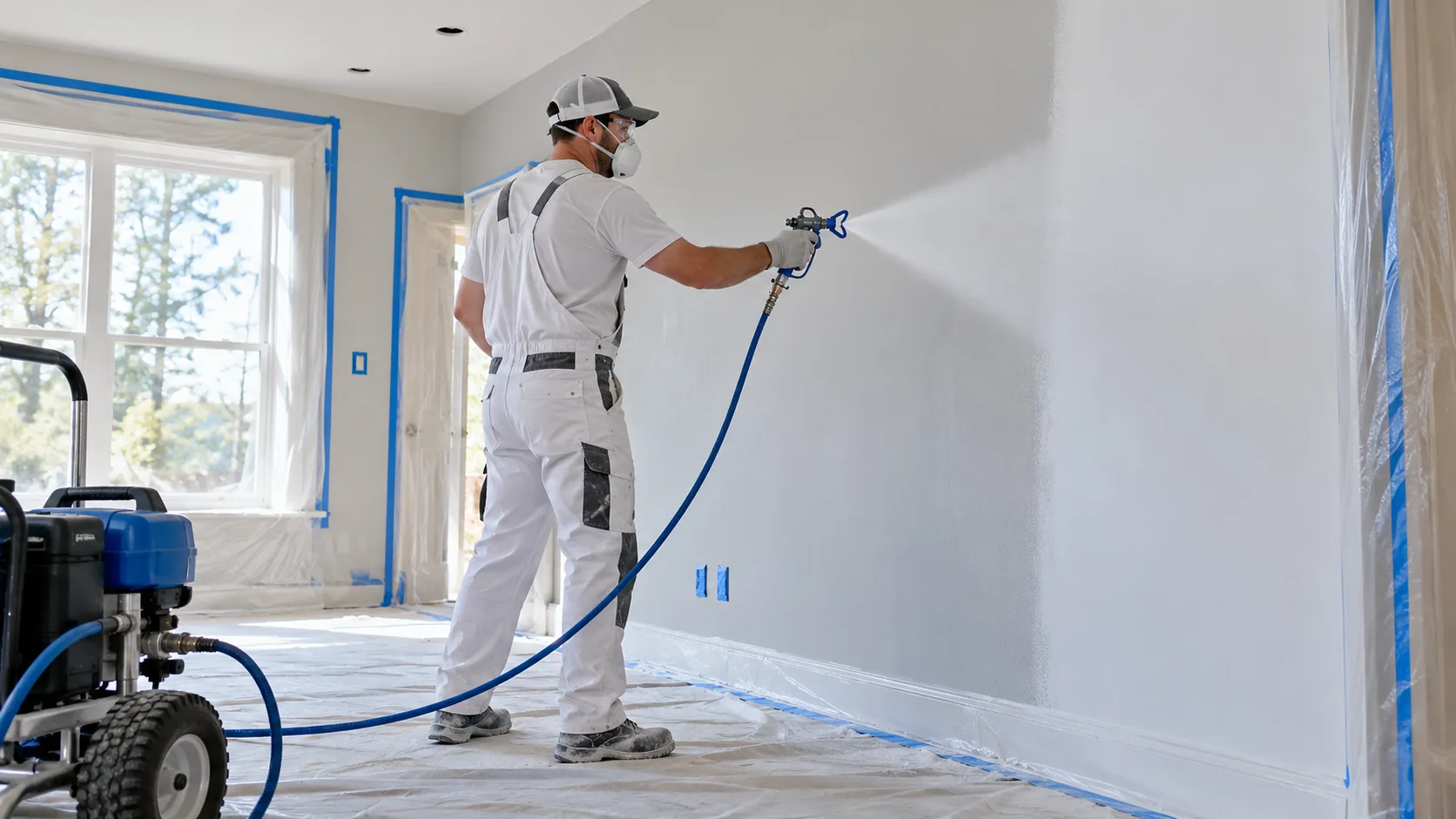
A topcoat is only as good as the primer under it. On large walls, ceilings and façades, spraying primer with an airless machine is far faster than rolling and lays down a more even film — which is exactly what a good base coat needs. The method is slightly different from topcoat spraying, mostly in tip choice and surface prep.
Why spray the primer at all
Primer seals the surface, evens out absorbency and gives the topcoat something consistent to bond to. Rolling it leaves ridges and varies the film thickness; spraying lays an even coat quickly and reaches texture and corners a roller struggles with. On absorbent or patchy substrates, that even sealing coat is what prevents a blotchy topcoat later.
Prepare the surface first
Spraying does not replace preparation — it makes good preparation look better and bad preparation look worse. Fill and sand, remove dust, and check the substrate.
- Clean and de-dust the surface; a dusty wall stops any primer bonding.
- Fill and sand defects — the sprayed film is thin and will not hide them.
- Check absorbency: strongly absorbent mineral substrates (fresh plaster, filler) usually need a penetrating primer first.
- Mask edges, floors and anything you do not want coated — spraying covers more area, including overspray, than a roller.
Choosing the tip for primer
Primer is usually sprayed with a medium tip. As a general industry guideline, thin wall primers and sealers run well around a 0.017–0.021 inch orifice, while thicker filling or masonry primers need a larger orifice. The first two digits of a reversible-tip number give the fan width (doubled), and the last two the orifice in thousandths of an inch — so pick the fan width to the surface and the orifice to the material. Always follow the primer manufacturer's recommended tip range, which is printed on the data sheet. Our guide on which airless tip for which paint covers the number system in detail.
Thinning and straining
Many primers spray straight from the tub, but some — especially filling and mineral primers — need a little thinning to atomise cleanly; follow the data sheet rather than guessing, and thin in small steps. Always strain the primer through a mesh before filling the hopper: primers settle and skin, and a lump that reaches the tip means a clog mid-wall. A clean suction and gun filter matched to the tip keeps the flow steady.
Pressure and technique
Set the lowest pressure that gives a full, even fan with no tails at the edges — too much pressure just wastes material and adds overspray. Keep the gun perpendicular to the wall, hold a steady distance of roughly 25–30 cm, move at an even speed and overlap each pass by about half. Trigger just before the stroke and release just after, so the film stays even and does not build at the ends. For the fundamentals of a clean pass, see correct airless spraying technique.
Matching the machine to the job
For wall and ceiling primer, a mid-range electric sprayer such as the GROG AZ700 (227 bar, 4 L/min) has the flow for a steady coat. For thick filling or mineral primers and large areas, a plastering-class machine like the GROG F4L (6 L/min) supplies the larger tips those materials need. Replacement tips and filters are listed with the other airless accessories.
Cleaning after priming
Primers — especially mineral and filling types — are hard on a machine if they dry inside it. Flush the system immediately after use with the right solvent (water for water-based primers) until it runs clear, then clean the tip, filter and gun separately. Dried primer in the pump is one of the most common causes of damage. A worn maintenance routine keeps the machine ready for the topcoat.
Frequently asked questions
What tip size is best for primer?
As a general rule, thin wall primers spray well around 0.017–0.021 inch, and thicker filling or masonry primers need a larger orifice. The exact tip depends on the specific product — always check the primer's data sheet and match the fan width to the surface.
Do I need to thin primer for airless spraying?
Many primers spray straight from the tub. Thicker filling or mineral primers sometimes need a little thinning to atomise cleanly. Follow the manufacturer's data sheet and thin in small steps rather than guessing.
Can I spray primer and topcoat with the same machine?
Yes. Clean the machine thoroughly between the two and switch to the tip the topcoat needs. The same sprayer handles both as long as it has the flow for the heavier of the two materials.
Conclusion
Sprayed primer is fast, even and the foundation of a professional finish — provided you prepare the surface, pick a tip to the material, strain and thin to the data sheet, and spray at the lowest effective pressure. Get the base coat right and the topcoat almost takes care of itself.