When to Replace an Airless Spray Tip: Recognising Tip Wear Before It Costs You
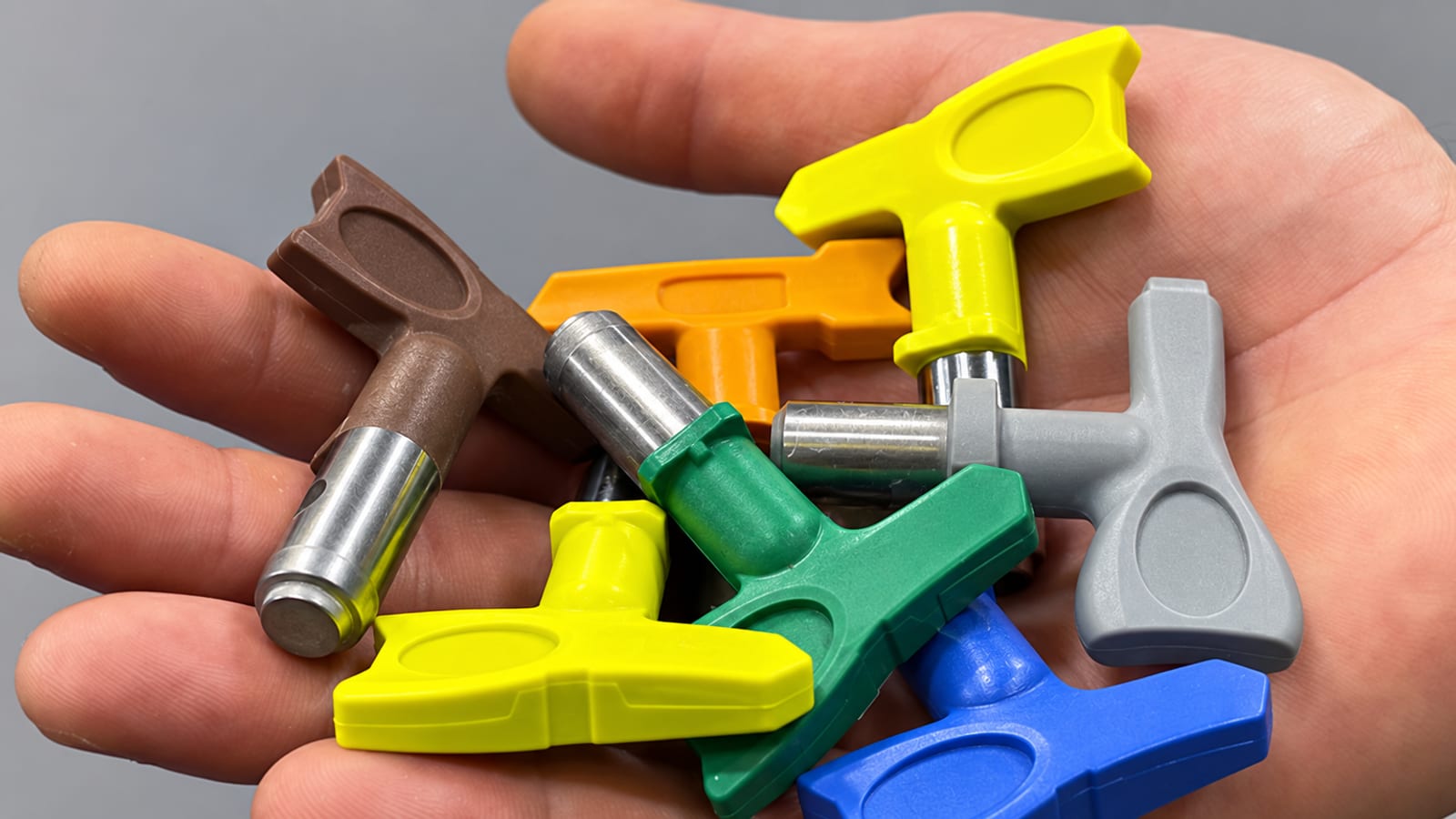
The spray tip is the smallest and cheapest part of an airless system, and the one that quietly costs the most when it is neglected. A tip is a wear item: every litre of coating passing through it slowly erodes the precision orifice that shapes the spray. Long after a tip stops producing a clean fan, many painters keep using it — paying for that decision in extra paint, extra passes and a poorer finish on every job.
This guide explains how an airless tip wears, the warning signs that it is past its best, why the coating you spray largely determines how long a tip lasts, and how to decide when to replace one. Because tip life depends heavily on the material and the manufacturer, this is about recognising wear and making a sound judgement — not about a fixed replacement interval.
Why a worn tip is a hidden cost
A new tip meters and shapes the coating precisely: the right amount of paint, atomised into an even fan of a known width. As the orifice wears, three things happen at once — the fan narrows, the flow rate rises, and atomisation degrades. The result is that you apply a thicker, less even film over a smaller area, so you use more paint, make more passes to cover the same wall, and still get a worse finish. The tip is cheap; everything it wastes is not.
How an airless tip wears
What the numbers on the tip mean
Most airless tips carry a three-digit number that describes the new tip. The first digit, doubled, is roughly the fan width in inches when sprayed about 30 cm from the surface; the last two digits are the orifice size in thousandths of an inch, which governs how much paint flows. A 515 tip, for example, is a nominal 10-inch fan with a 0.015-inch orifice. Understanding this helps you see what wear does: as the orifice erodes it effectively enlarges, and the fan it produces gets narrower over time. For matching a tip to a coating in the first place, see choosing the right tip for the paint.
What actually wears, and why
Coating is forced through the tiny orifice at very high pressure, and any solid content in the paint acts like a mild abrasive scouring the opening. Over time that erosion enlarges and distorts the orifice. A larger, less regular opening passes more fluid and can no longer form a full, wide fan — which is why a worn tip sprays a narrower band that needs more overlap and more material to cover. Running higher pressure than necessary and spraying abrasive, unstrained material both speed this erosion up.
The warning signs of a worn tip
- A narrower fan: the same tip that used to cover a certain width now lays down a visibly narrower band, forcing you into more passes.
- Tails that will not clear at normal pressure: if the pattern tails even after correct pressure setting, a worn tip is a prime suspect — see pressure and pattern adjustment.
- Higher paint consumption: jobs start using noticeably more material than they used to for the same coverage.
- A heavier, less even film: the coat goes on thick and uneven, with more tendency to run, because flow has increased and atomisation has dropped.
- Needing more pressure to get an acceptable pattern: creeping the pressure up over time to compensate is a classic sign the tip is worn out.
Your coating decides how long a tip lasts
There is no single mileage for a spray tip, because wear rate depends mostly on what you spray. More abrasive, higher-solids coatings wear tips far faster than thin, low-solids ones:
- Faster wear: primers, masonry and elastomeric coatings, high-build and filled materials, and heavily pigmented paints — anything with a lot of solid content.
- Slower wear: thin, low-solid finishes such as stains, sealers and lacquers pass through with much less erosion.
This is why a tip might last a long run of light finish work yet be visibly worn after a much shorter run of abrasive primer. Always defer to the tip and coating manufacturer's guidance rather than assuming a tip is fine because it has not sprayed "that much" paint.
How to check and when to replace
The most practical test is the spray pattern itself. Periodically trigger a test pass onto scrap and compare it to how that tip sprayed when new: if the fan is noticeably narrower, tails at a pressure that used to work, or the film goes on heavier and less even, the tip is worn. When a fresh tip of the same size immediately restores a wider, cleaner fan at lower pressure, that confirms the old one was the problem. Replace a tip once it can no longer produce its original pattern at a sensible pressure — continuing to run it only wastes paint and degrades the finish.
Reversible tips, which flip to clear a clog, are convenient but still wear like any other; a tip that clogs constantly may in fact be worn rather than simply blocked. Keep spare tips of the sizes you use most so a worn one never forces you to compromise mid-job — you can find spray tips and accessories here.
Getting the most life from every tip
- Spray at the lowest effective pressure. Excess pressure is the biggest accelerator of tip wear, as covered in pressure and pattern adjustment.
- Strain your paint and use the right filters, so grit and skins do not scour or clog the orifice.
- Flush and clean the tip thoroughly after every job; dried material damages the seat and the orifice. Our maintenance checklist covers the full routine.
- Match the tip to the coating so you are not over-pressurising a tip that is too small for a heavy material.
Conclusion
An airless tip is a consumable that wears from the first litre, and a worn one costs you continuously in paint, time and finish quality long before it fails outright. Watch the spray pattern rather than the calendar: a narrowing fan, tails at a once-good pressure, rising consumption and a creeping pressure setting all say the tip is done. Let the coating and the manufacturer's guidance set your expectations for tip life, keep spares on hand, and protect every tip with low pressure, strained paint and thorough cleaning. Browse GROG accessories for replacement tips, or explore the sprayer range if you are choosing a new machine.