How to Spray Plaster with an Airless Machine: Step-by-Step Guide
GROG Airless·2 min read
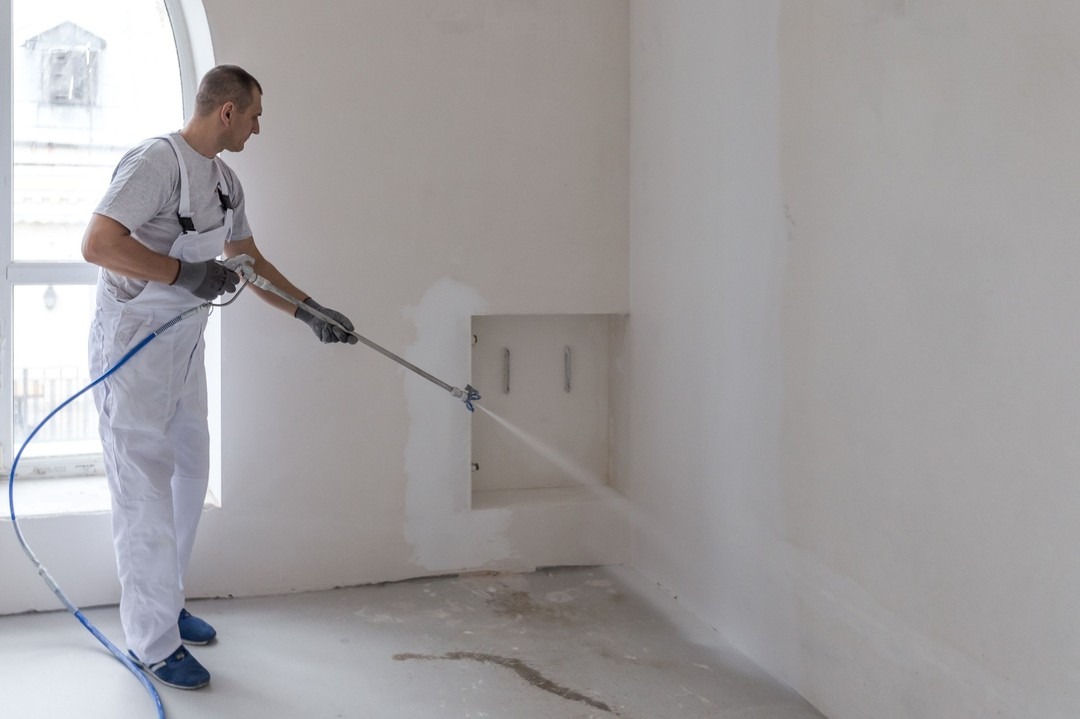
Spraying plaster with an airless machine is significantly faster than manual application and delivers a more consistent finish. However, it requires the right equipment, correct material preparation, and proper technique.
What You Need
- Airless plastering machine (GROG F4L, F5, or AZ-700 recommended)
- Correct plaster mix — pre-mixed or site-mixed
- Appropriate nozzle for plaster (wide fan tip)
- Protective covering for floors and windows
- Mixing drill and bucket
- Personal protective equipment (goggles, gloves, mask)
Step 1 — Prepare the Surface
- Clean the surface — remove dust, grease, and loose material
- Fill large cracks and holes beforehand
- Apply bonding primer if required
- Mask windows, doors, and floors
Step 2 — Prepare the Plaster
- Mix plaster according to manufacturer instructions
- Consistency should be smooth and lump-free
- For machine application, slightly thinner consistency works best
- Test flow through the machine before starting
Step 3 — Set Up the Machine
- Connect all hoses securely
- Prime the machine with water before loading plaster
- Load the plaster into the hopper or suction tube
- Set pressure according to material viscosity
- Test spray on a scrap surface first
Step 4 — Apply the Plaster
- Hold the gun 30–50 cm from the surface
- Move in smooth, overlapping passes
- Keep the gun perpendicular to the surface
- Apply in thin, even coats — do not try to build up too thick in one pass
- Work from top to bottom on walls
Step 5 — Finish and Clean
- Allow first coat to set before applying second coat
- Smooth the surface with a trowel while still wet if required
- Clean the machine immediately after use with water
- Flush all hoses and the gun thoroughly
Common Mistakes to Avoid
- Using plaster that is too thick — causes blockages
- Holding the gun too close — creates uneven application
- Not cleaning the machine immediately — plaster hardens and damages seals
- Skipping surface preparation — reduces adhesion
Best GROG Machines for Plastering → GROG F4L — professional electric plastering machine → GROG F5 — high-performance plastering machine → GROG AZ-700 — versatile airless sprayer for plaster and paint
Conclusion
With the right machine and technique, airless plaster spraying is one of the most productive methods in modern construction. A single operator with a GROG plastering machine can cover the same area in one day that would take a team several days by hand.
#plaster#technique